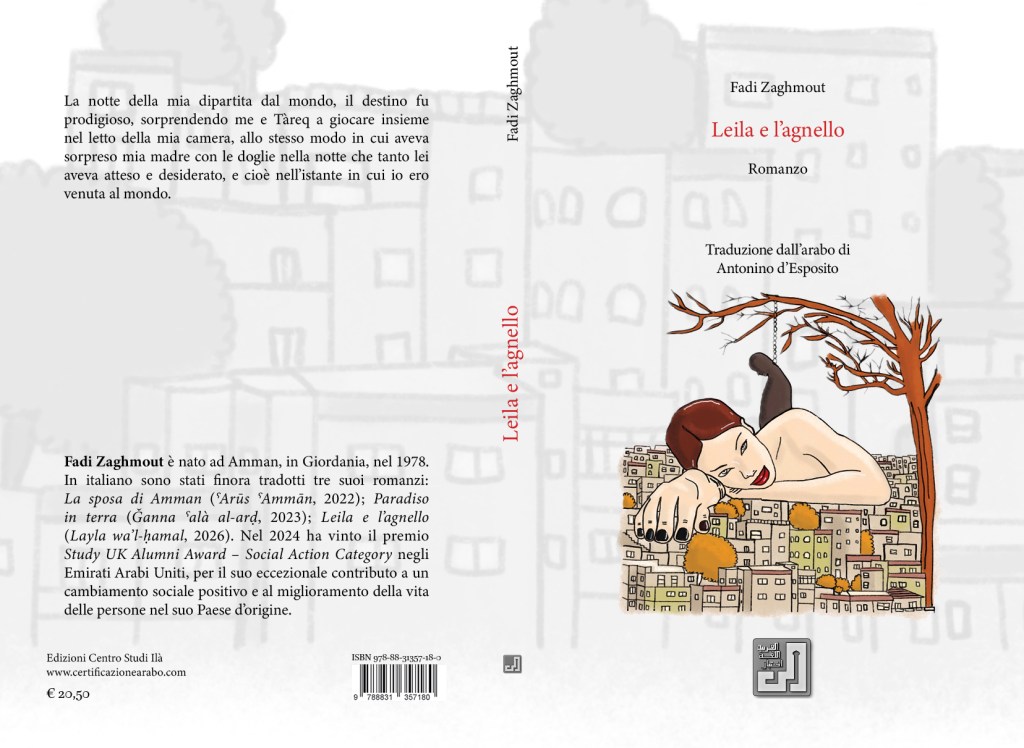
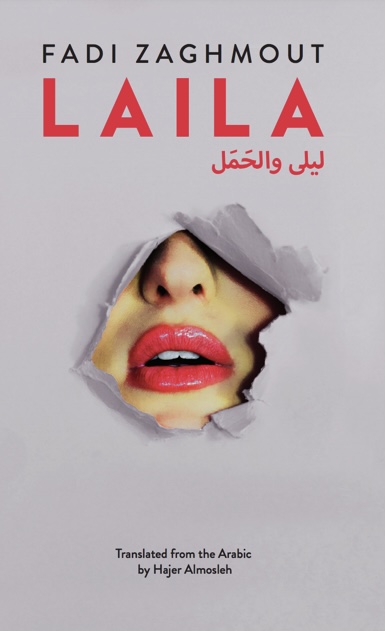
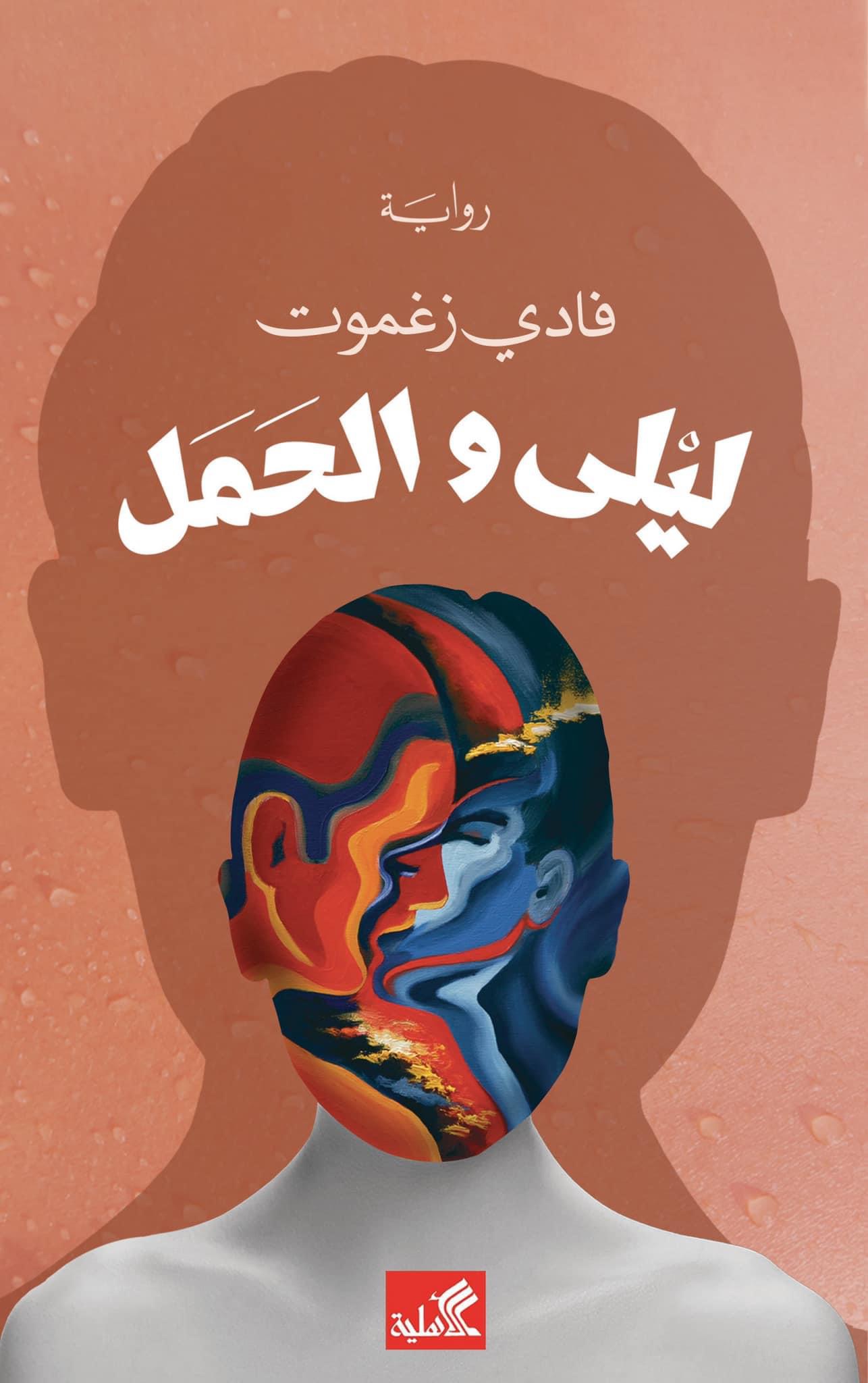
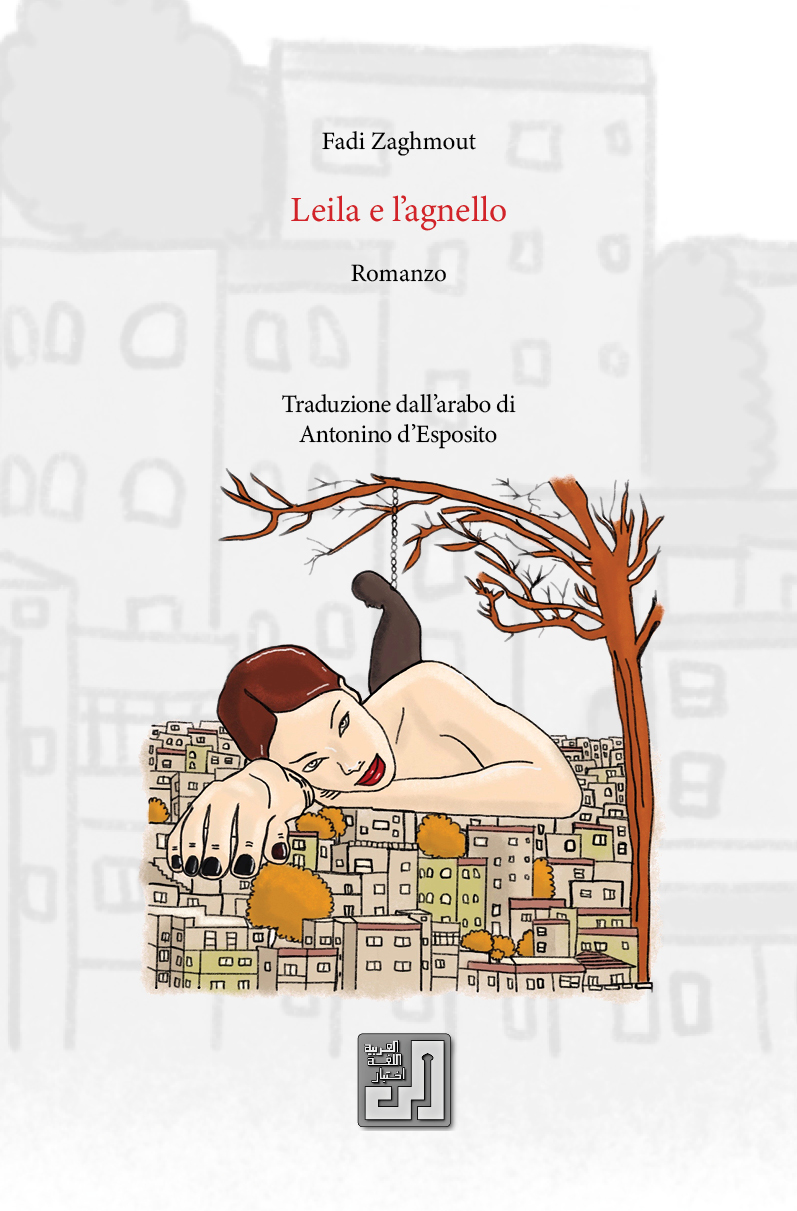
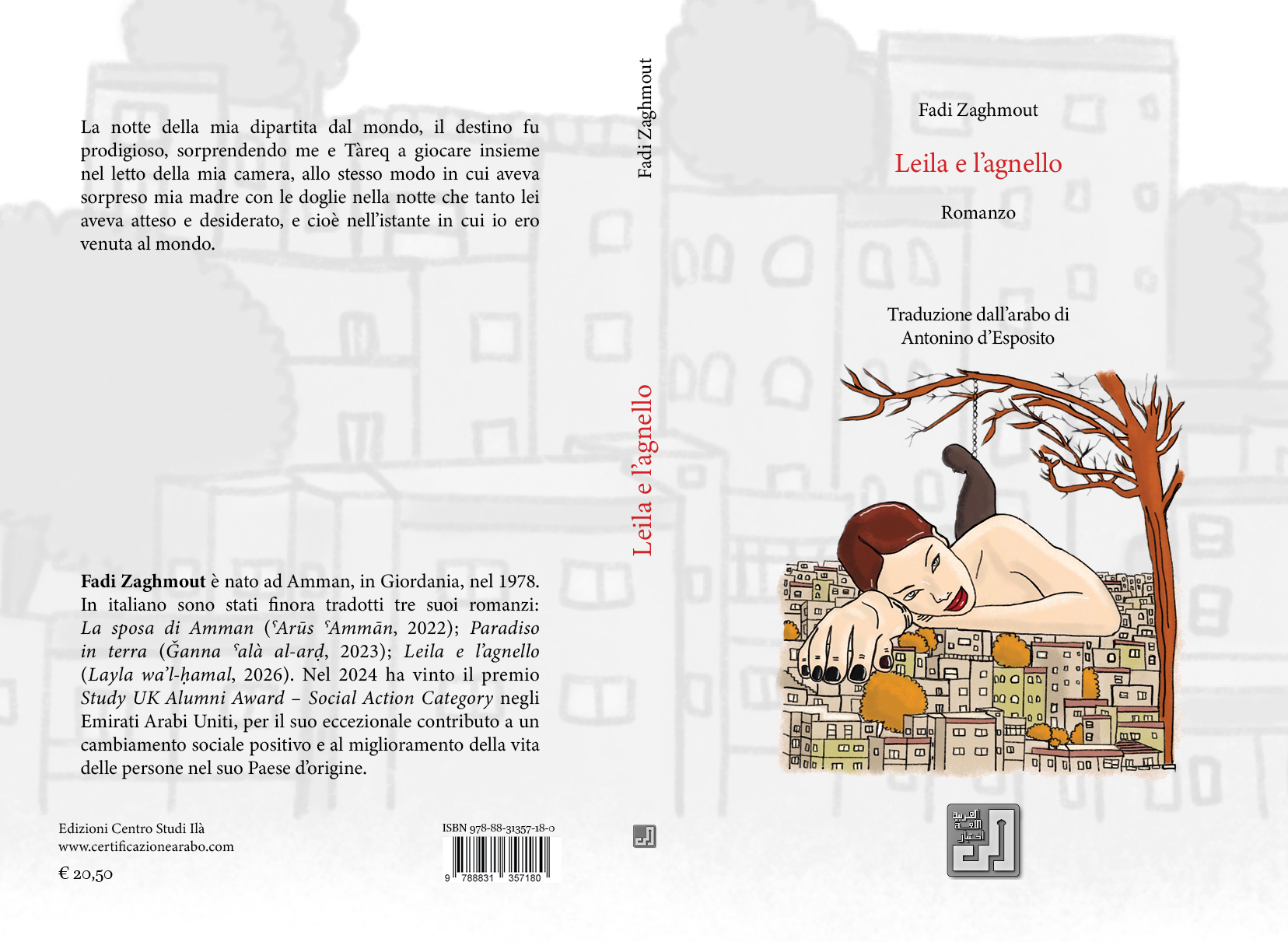
It has been almost a month since my publisher told me that the book is ready. Originally published in Arabic as Laila wal Hamal (ليلى والحمل) in 2017 by the Egyptian publisher Kotob Khan, and in English as LAILA in 2020 by Signal8Press (Now in a new print by Rebel Satori), it has finally been translated into Italian as Leila e l’agnello, published by Edizioni Centro Studi Ilà and translated by Antonino d’Esposito.
ليلى والحَمَل
2017
LAILA
2020
ليلى والحَمَل طبعة جديدة
2023
Leila e L’agnello
2026
Laila wal Hamal was the third novel I wrote in Arabic. It was also the third of my books to be translated into English, and the third to receive an Italian translation, after La Sposa Di Amman (published by MReditori in 2022) and Paradiso in Terra (published by Future Fiction in 2023).
The release of this book in Italian has special significance to me for two reasons:
It is the first book for which I created the cover art.
The circumstances surrounding its original release in Arabic.
Such a strong one of a kind novel, I personally was searching far too long for any work of Arabic literature that portraits women as the leader of the relationship
Hiba Roza
Due to its portrayal of a sexually dominant female protagonist (Laila), the book was banned in Jordan when it was first released. The ban, of course, limited its reach and didn’t help the book find the audience it deserved. Similar challenges occurred with the English translation, when the original translator withdrew a few months before delivering the full manuscript. As a result, the book was delayed and eventually published in 2020—a COVID-era release—which limited the promotional activities I had planned at the time.
Nevertheless, I am very happy that this story can now be read in Italian, especially given its sensitive nature. They wanted to silence Laila—now she speaks three languages. If books were children, I would say Laila is the child born under difficult circumstances. She is my shortest, but the loudest among them. She is the most fun, daring, and exciting to read—and also the most judged for who she is and what she represents.
My mother would say, “Laila is motamarreda,” meaning rebellious. Being a rebellious woman is not something celebrated in the Arab world. And although I love rebellious women and admire those who stand up for themselves regardless of the circumstances, I would still defend Laila by saying, “She isn’t motamarreda, Mom!”
Here, I challenge the negative connotations attached to the word—disobedient, defiant, insubordinate. Disobedient to whom? Defiant of what? Why is obedience expected of women? Why do we continue to repeat this social fallacy?
I finished the book in two hour time I admire the authors courage he is one of not too many in our culture who would have the guts to break those kind of taboos where most of people are aware yet too hesitant to say it loud and clear
Grace
Laila is a woman who confronts desires that are at odds with what is expected of her gender. She is not rebellious as much as she is simply true to herself—true to her nature and her reality. She becomes aware of how she wants to live her life. Unfortunately, this is a suppressed story because it defies the simplistic patriarchal narrative in Arab societies. It does not only erase sexually dominant women like Laila (who are many), but also men like Tarek in the book, who are sexually submissive (and they, too, are many).
Even in Western media, such women are often portrayed in a comical context or confined to sexualized professions. As if depicting a loving married couple where the woman leads the sexual dynamic is still something audiences are not ready to accept, read about, or watch.
Laila lives these contradictions. She navigates her daily life as a modern Jordanian woman, dealing with social constraints, a marriage to a typical Jordanian man who wants to lead both the household and the sexual relationship, while also managing her desires and her growing feelings for another man who fulfills her fantasies.
Sadly, what she dreams of and anticipates is cut short by unfortunate circumstances. I’ll leave that for you to discover—and I’d love to hear what you think.




 Fadi Zaghmout فادي زغموت
Do you have something to say?