

A Beautiful Duet
A few years ago, Elissa and Fadel Chaker came together for a duet called Gowwa Al Ro7 (Inside the Soul), a romantic song where two lovers express their deep affection for each other. At the time, it was a perfect match—two of the most popular Arab singers excelling in this genre. Fadel was no less romantic than Elissa, and his songs carried just as much love.
Best Lebanese Singer 2013
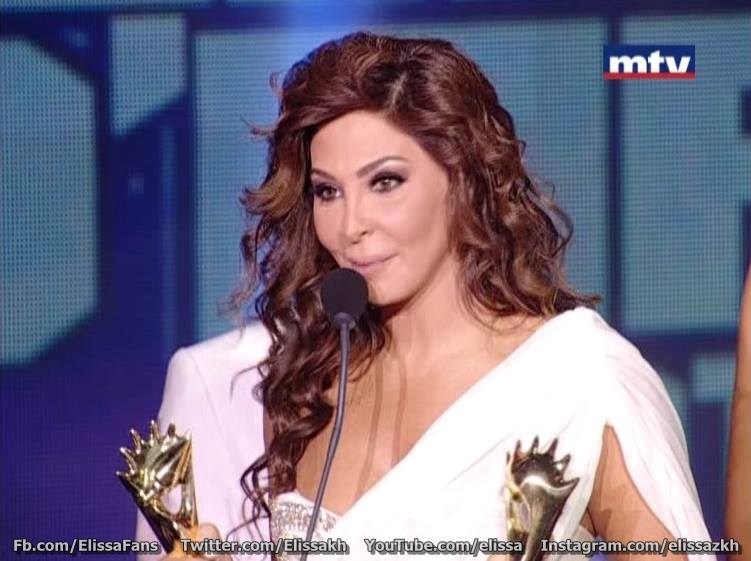
Fast forward to June 23, 2013 (yesterday). Elissa is on stage at one of the biggest celebrations of the Arab TV industry, The Murex D’or, celebrating her success with two awards: Best Lebanese Singer and Best Arabic Song for As3ad Wahdah (The Happiest). Meanwhile, Fadel Chaker is under siege in a mosque in the Lebanese town of Saida, fighting alongside a terrorist Salafi group against the official Lebanese army.
On stage, Elissa appears in an extravagant white dress. She acknowledges that she doesn’t feel like the happiest tonight, as it’s impossible not to be affected by the violence happening on the ground. Yet, she finds solace in the fact that this event is still taking place, proving that people continue to celebrate music and life.
Becoming a Terrorist
Earlier that same day, in a widely circulated video, Fadel Chaker appears with a long beard, cursing Hezbollah and its leader Hassan Nasrallah. He threatens—no, promises—to kill the mayor of Saida.
Watching Fadel Chaker speak like that is mind-boggling. How can a man with such an angelic voice, who spent years singing about love, abandon everything and become an agent of hatred and violence? I don’t want to play devil’s advocate, but in other videos, he comes across as sincere in his beliefs. The horrors happening in Syria are undeniable, and the urge to stop the killings is natural. Still, the means he has chosen are deeply questionable. I would rather see him fighting with his voice, singing for the people, for peace and harmony—something far more effective than participating in this devilish game.
That’s what Elissa is doing. She has never shied away from expressing her political stance. She likely despises Hassan Nasrallah and Bashar al-Assad as much as Fadel does, yet she voices her opinions through words, not bullets.
Gender Divide in the Arab World
Looking at both singers, I can’t help but think about the gender divide in the Arab world. We often discuss the injustices women face—and rightfully so—but perhaps Arab men are trapped in an equally tragic reality. The value of life has taken a backseat to distorted ideals of honor and pride, pushing men toward a deadly path.
If you look at the most-followed Arab personalities online, the list is strikingly polarized: Lebanese female singers on one side, Saudi religious leaders on the other. Elissa, for example, boasts over 1.3 million followers and ranks as the fourth most influential figure in the MENA region, according to Klout. In comparison, Fadel Chaker’s Twitter account has just 147,830 followers. This stark contrast highlights the growing divide between religious and non-religious communities in the Arab world—and how men and women fit into it.
Polarisation
Despite Elissa’s undeniable popularity, there remains a significant portion of Arabic culture that looks down on her and what she represents. In her first music video, she appeared wrapped in nothing but a blanket, letting the wind dictate its movement. The song, Baddi Doub, was a massive hit, but she had to fight for years to prove herself, constantly fending off accusations that she relied on her body, rather than her voice, to succeed. Even today, over 15 years into her career, some still dismiss her as the blanket singer.
It’s also true that her bold appearance paved the way for a wave of female singers who embraced their sexuality and femininity to gain fame—something that remains controversial among both men and women in the Arab world.
Meanwhile, Fadel Chaker never faced such scrutiny. As a man, he was respected for his voice and his music. Ironically, he later renounced his own work, declaring music haram (forbidden). The public’s reaction to his transformation has been mixed. While many curse him for looking like a terrorist and fighting the Lebanese army, others praise him for “repenting” and choosing Allah’s path, seeing him as a hero protecting his fellow Sunnis.
The Real Hero
For me, I would choose Elissa’s kind of heroism any day. Arab society has a long history of looking down on female artists, especially those who push cultural boundaries and embrace their femininity. Some may argue that this overexposure of female sexuality objectifies women, but perhaps it is precisely what we need more of—women who celebrate their identities in whatever way they see fit.
I wish Fadel Chaker had been there yesterday, standing next to Elissa on stage, receiving an award for celebrating life instead of waging war
2025 – Hobbak Methel Beirut
Updating this blog post 12 years later: Elissa is still fighting for her country through her voice, singing for her city, Beirut— a city that insists on being a beacon of culture, music, and joy despite the horrors of war and the shadows of darkness.
Fadel Chaker has been sentenced to 22 years in prison. He has repented and claims that he is no longer a terrorist. He is also singing again. Sadly, the damage has been done. Will his fans ever forgive him? Only time will tell.




 Fadi Zaghmout فادي زغموت
Do you have something to say?